

Making Tax Digital Checker for GPs
When Making Tax Digital starts for you, from the fees you invoice and any rent. Your salary doesn’t count, and nor does a partner’s profit share.
A guide to HMRC's rules, not tax advice. HMRC writes to tell you when you are in.
 Free to start · on iPhone, Android and the web
Quarterly updates from your diary
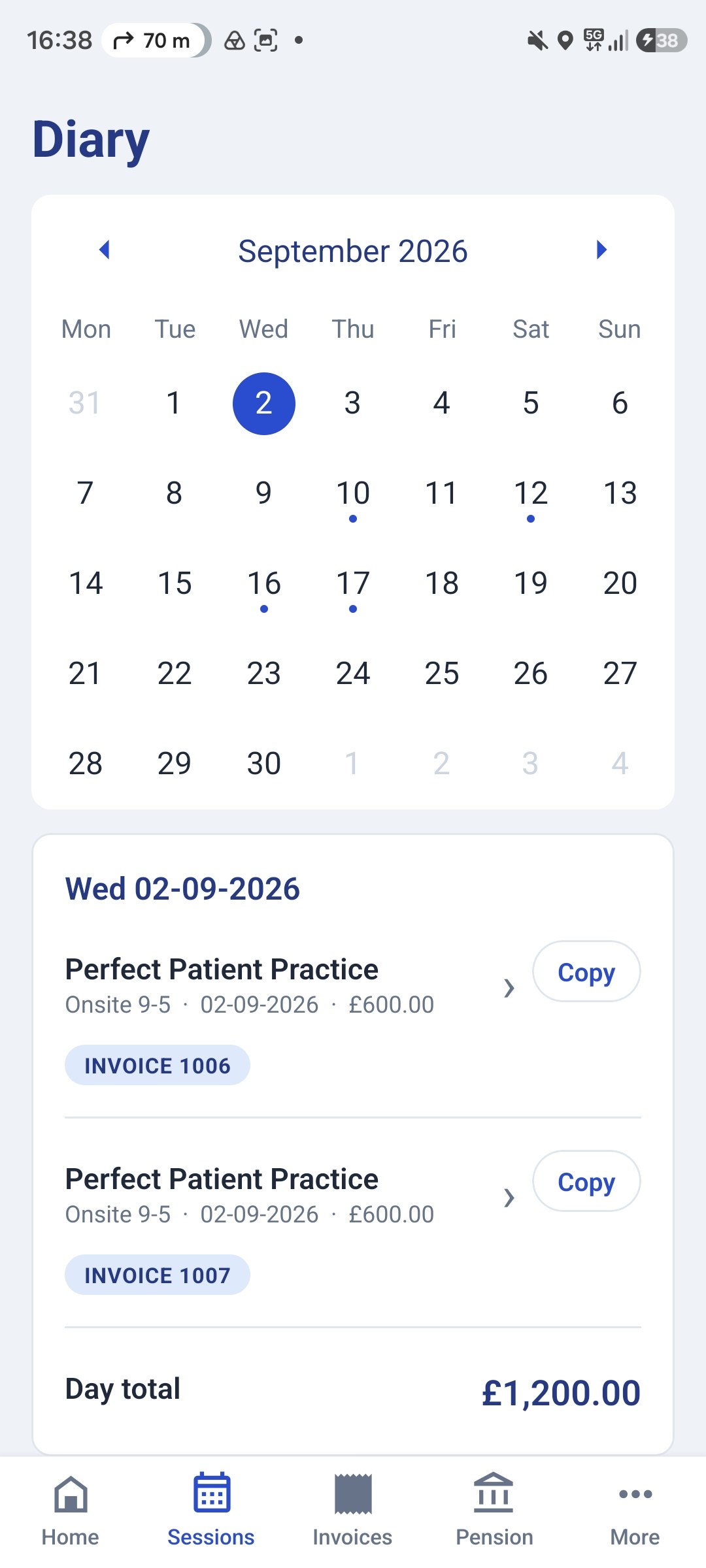
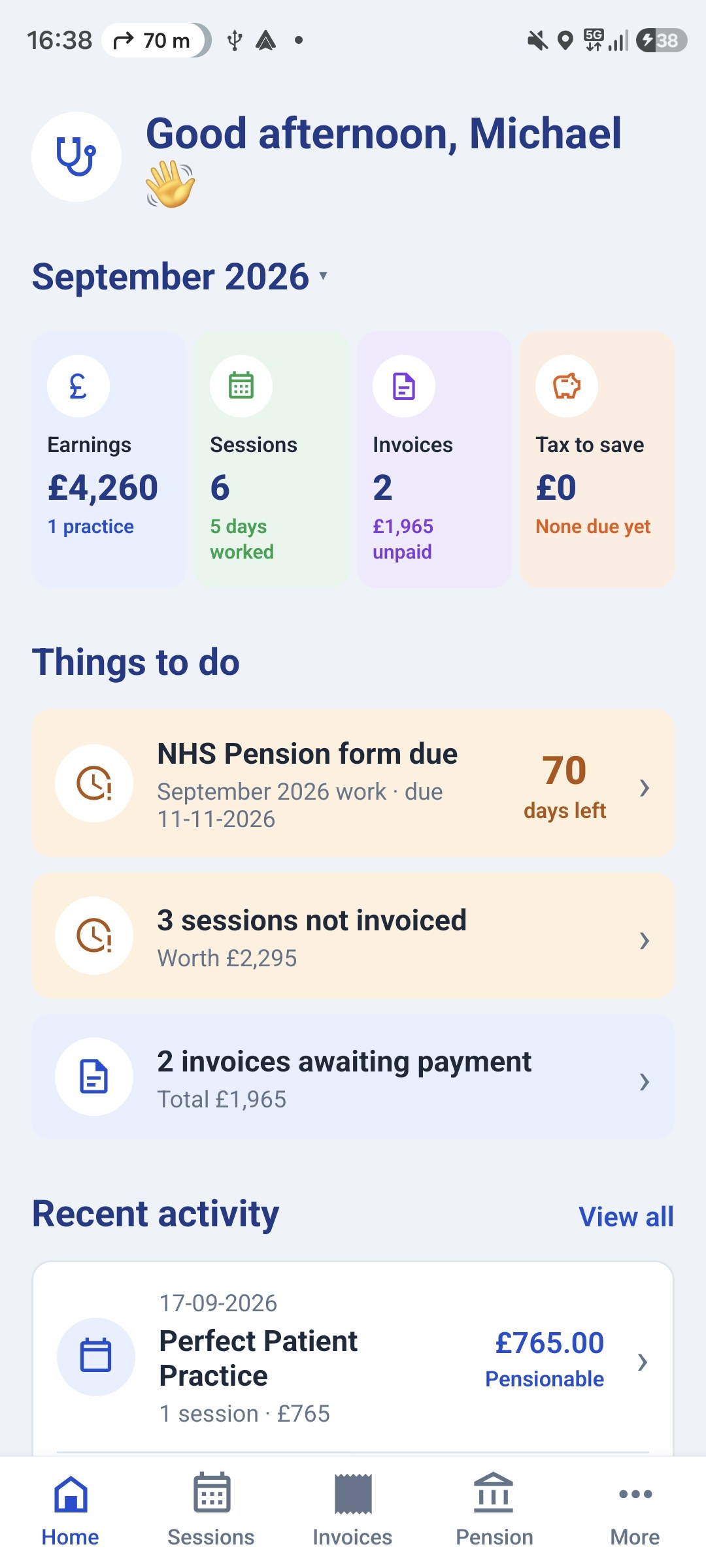
GP Locum logs each session, journey and expense, and builds each quarterly update from them, ready for bridging software to send to HMRC. On your phone and on the website.


Or use it on the website, free →
Also on your phone: App Store for iPhone and Google Play for Android.
What counts for a GP
HMRC calls it qualifying income: your self-employment income plus your property income, before expenses. For most GPs that is the locum, out-of-hours, appraisal, private and medico-legal fees you invoice, plus gross rent (your share, if you own the property with someone). Salaried pay doesn’t count, and nor do a partner’s share of the practice profit, NHS and private pensions, or dividends.
So a salaried GP on £70,000 who does £12,000 of locum sessions has qualifying income of £12,000, not £82,000. And a locum who invoices £45,000 but keeps £30,000 after expenses is judged on the £45,000.
The 14.38% employer pension contribution a locum collects from practices and passes on to NHS Pensions is the practice’s money, so it shouldn’t be in the figure either. The Making Tax Digital guide sets out why.
When you join
Each year’s return decides the April two years later: over £50,000 in 2024/25 brings you in from 6 April 2026; over £30,000 in 2025/26 brings you in from 6 April 2027; over £20,000 in 2026/27 brings you in from 6 April 2028. HMRC reads the figure from the return it holds and writes to you, but it is your job to check, and to sign up if the letter doesn’t come.
The return due next is for 2025/26, by 31 January 2027. If your fees and rent for that year were over £30,000, you are in from 6 April 2027. Partnerships will be brought in later, on a timetable HMRC hasn’t set yet.
What changes once you are in
You keep your records in software that works with MTD and send HMRC a short update after each quarter: by 7 August, 7 November, 7 February and 7 May. Each update is your income and expenses for the tax year so far. After the year ends, a final declaration replaces the old return, by 31 January as before.
The tax itself doesn’t change, and nor do the dates you pay it: the 31 January bill and the July payment on account carry on as now. The MTD guide for locum GPs covers the records, the software routes and the deadlines in detail.
Frequently asked questions
- Does my salary count towards the Making Tax Digital threshold?
- No. Employed (PAYE) pay is never qualifying income. A salaried GP who does some locum work is judged on the locum fees alone, plus any rent: £12,000 of sessions on top of a £70,000 salary is £12,000 of qualifying income.
- Do locum GPs have to use Making Tax Digital?
- Most will, within two years: over £50,000 in 2024/25 brings you in from 6 April 2026; over £30,000 in 2025/26 brings you in from 6 April 2027; over £20,000 in 2026/27 brings you in from 6 April 2028. The figure is your fees before expenses, so a locum doing more than one or two sessions a week is likely to be over the line by April 2028.
- Is the MTD threshold based on profit or turnover?
- Turnover: your self-employed income and rent before any expenses. A locum invoicing £45,000 with £30,000 left after expenses has qualifying income of £45,000.
- Are GP partners in Making Tax Digital?
- Not for their partnership profit share, which doesn't count and isn't reported quarterly. HMRC says partnerships will follow at a date it has not set. A partner with their own self-employed fees or rent outside the partnership is judged on those.
- Does the employer pension contribution count as income for MTD?
- It shouldn't. The 14.38% a locum collects from practices is the practice's contribution, passed on to NHS Pensions, so it belongs outside your income and out of the threshold test. Leave it out of the fees you enter here.
- When are the quarterly updates due?
- By 7 August, 7 November, 7 February and 7 May. Each one covers the tax year from 6 April to 5 July, 5 October, 5 January and 5 April in turn. The final declaration for the year is due by 31 January after it ends.
Sources
Checked 9 November 2026. Rates and factors change. The primary source wins if it disagrees with anything here.
- Find out if and when you need to use Making Tax Digital for Income Tax, GOV.UK: the thresholds, the years they are judged on, and partnerships to follow
- Work out your qualifying income for Making Tax Digital for Income Tax, GOV.UK, updated 11 September 2026: income before expenses; PAYE pay and partnership profit share not counted
- Use Making Tax Digital for Income Tax: send quarterly updates, GOV.UK: the update periods and deadlines
- Find software that's compatible with Making Tax Digital for Income Tax, GOV.UK
Read the guide
Making Tax Digital for Locum GPs
Who is in scope, the quarterly deadlines, why the employer pension contribution stays out of turnover, and the filing routes.
Read guide →31 January Tax Bill Calculator
What you pay HMRC on 31 January: the year's bill, the payment on account on top of it, and the July payment that follows. For locum GPs, and salaried GPs with locum work.
Open tool →Portfolio GP Roles
Trainer, appraiser, teaching, examining, tribunal, medical examiner, CQC and expert witness work, with what each pays where it is published.
Read guide →GP Locum Tax Guide
Every deduction that comes out of a newly qualified locum's fees: tax, Class 4 NI, student loan, pension, expenses and the first 31 January.
Read guide →