

Retiring as a GP: Early, Partial and 24-Hour Retirement, Ill Health and Lump Sums
Every way a GP can take their NHS pension, what each one costs or requires, and the timetable for applying through PCSE. Including the options for carrying on working, which since 2023 are much more flexible than many GPs realise.
The short answer
| Option | From what age | Do you stop work? | What it costs you |
|---|---|---|---|
| Retire at normal pension age | 60 (1995), 65 (2008), State Pension age (2015) | Yes, at least 24 hours | Nothing |
| Early retirement | 55 | Yes, at least 24 hours | A reduction for each year before normal pension age |
| Partial retirement | 55 | No, but pay must fall by at least 10% for 12 months | A reduction on the part you take, if before normal pension age |
| Retire and return | Any age you can retire | 24 hours, then no limit | As for the retirement you take |
| Ill health retirement | Before normal pension age | Yes | Nothing: no reduction, and Tier 2 adds an enhancement |
Most GPs have pension in more than one part of the scheme, each with its own normal pension age, so the right age to take it can differ between them. The pension calculator shows what each retirement age gives you.
When you can take your pension
Normal pension age is when the pension is paid in full:
- 1995 Section: 60
- 2008 Section: 65
- 2015 Scheme: your State Pension age, or 65 if that is later. For most GPs now working it is 67 or 68.
The minimum pension age is the earliest you can take it voluntarily: 55 for the 2008 Section and the 2015 Scheme. In the 1995 Section it is also 55, unless you were an active member between 31 March 2000 and 5 April 2006 and have stayed in membership, in which case it can be 50.
The minimum pension age rises to 57 on 6 April 2028. The government's rules protect members who, before 4 November 2021, belonged to a scheme giving them the right to take benefits at 55, so most existing NHS members are expected to keep 55. Confirm your own position with NHS Pensions before you plan around it.
Early retirement and the reduction
Take your pension before normal pension age and it is reduced, because it will be paid for longer. The reduction comes from actuarial factors that grow steeply the further you are from normal pension age, so the cost of going a few years early can be larger than a simple percentage suggests.
Two things can change the sums:
- ERRBO. 2015 Scheme members can pay extra to buy out up to three years of the reduction. The ERRBO guide and the ERRBO calculator cover whether it is worth it.
- The McCloud choice. Your service from April 2015 to March 2022 can be paid as 1995 or 2008 Section benefits or as 2015 Scheme benefits, and the two have different normal pension ages. You make that choice when you claim. The McCloud guide explains it, and the McCloud calculator shows which option is worth more at each age. How the 1995 and 2008 Sections are worked out, final salary for officers and career average for GPs, is in the 1995 and 2008 Sections guide.
Partial retirement: taking some of it and carrying on
Partial retirement, sometimes called draw down, lets you take part of your pension while you keep working, with no break in service. Since 1 October 2023 it has been open to 1995 Section members too.
- Age: 55 or over.
- Agreement: your employer has to agree.
- How much: between 20% and 100% of your pension, in one or two draw downs.
- The condition: a new working arrangement that cuts your pensionable pay by at least 10%, kept at that lower level for at least 12 months.
The part you take is reduced if you take it before normal pension age, in the same way as early retirement. The part you leave keeps growing as you carry on working.
24-hour retirement: retiring and coming back
The other route is to retire fully, take your whole pension, and come back. For GPs this is usually called 24-hour retirement.
The break. You must not do any NHS pensionable work for the first 24 hours of your retirement, whichever part of the scheme your pension is in. If you hold more than one post, you retire from all of them.
After the break, there is no limit on your hours. The old 16-hour rule, which capped 1995 Section members' hours in the first month back, was removed in England, Wales and Scotland from 1 April 2023. It still applies in Northern Ireland.
You can build more pension. Since 1 April 2023, members who have retired from the 1995 or 2008 Section can join the 2015 Scheme when they return, if they are under 75.
For GP partners
- You must resign from the NHS contract for the 24 hours. For a GMS partner, that means resigning from the partnership.
- There is no automatic right to be readmitted, as a partner or as a salaried GP. Agree the terms of your return before you go, either by amending the partnership agreement or with a deed signed beforehand.
- PMS practices need to discuss the change with their commissioner.
- Start planning about six months ahead, and keep a record showing the 24-hour break happened.
Many GPs come back as locums instead, which avoids renegotiating a partnership but makes you self-employed for that work, with its own tax and pension paperwork. The locum pension guide covers pensioning locum sessions.
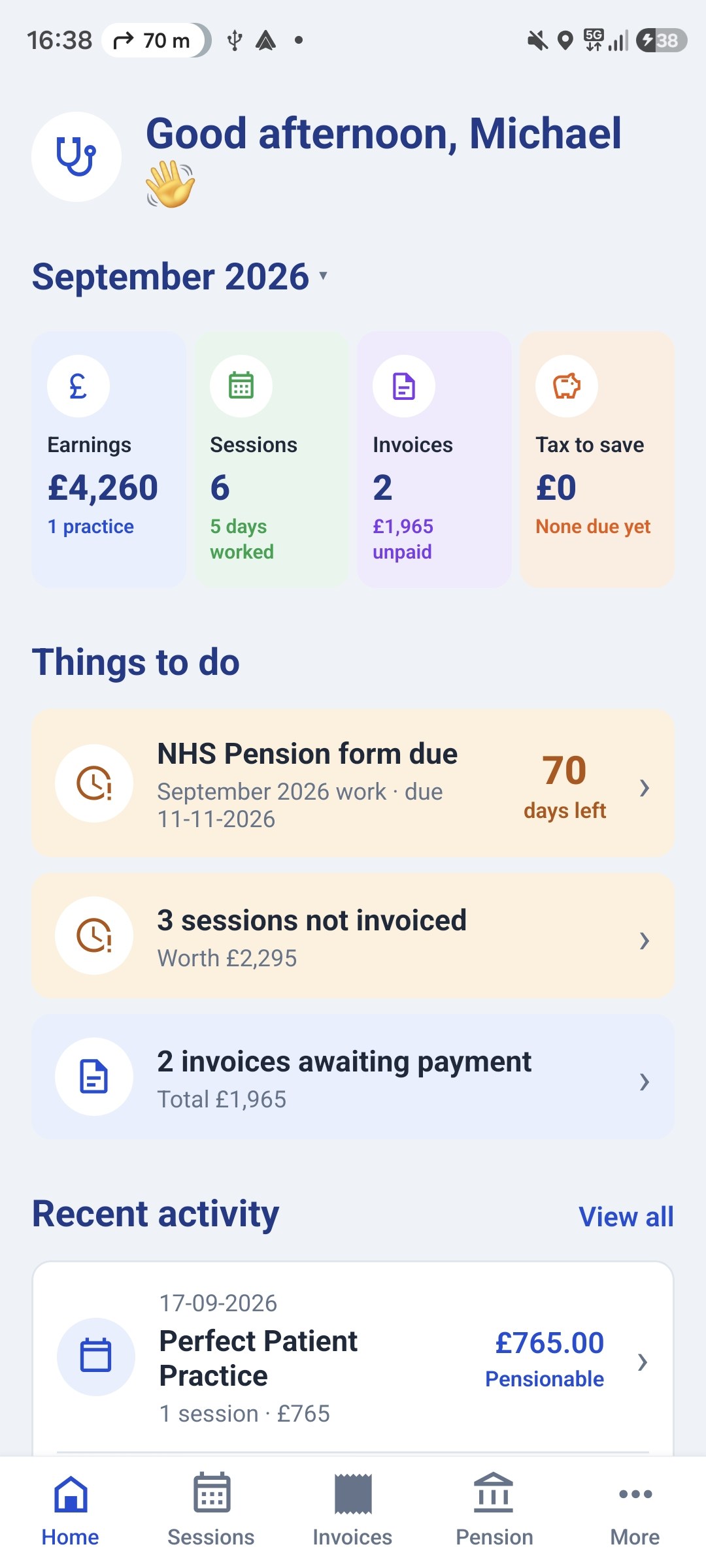
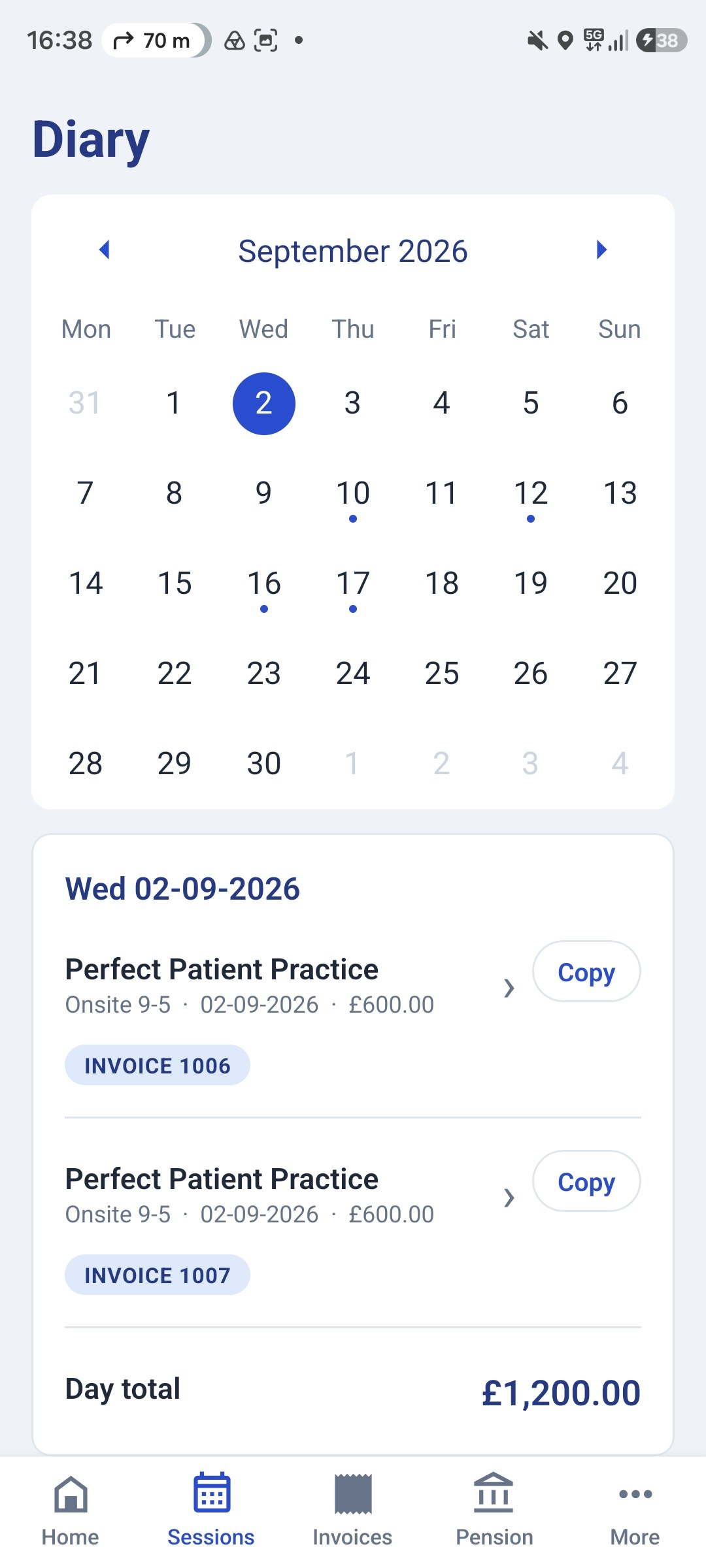
Free to start — on iPhone, Android and the web
Coming back as a locum?
GP Locum logs each session as you book it, raises the invoices, fills your Form A and Form B, and keeps track of what to set aside for tax, so the admin of locum work is done as you go. On your phone and on the website.


Ill health retirement
If permanent ill health stops you working, you can take your pension early without the reduction. You need at least two years' membership and to be under normal pension age. NHS Pensions' medical advisers decide which tier applies.
| Condition | What you get | |
|---|---|---|
| Tier 1 | Permanently unable to do your own NHS job | The pension you have built up, paid now without any reduction |
| Tier 2 | Tier 1, and permanently unable to do any regular work of similar hours | Tier 1, plus an enhancement: two thirds of your prospective membership to normal pension age in the 1995 and 2008 Sections, one half in the 2015 Scheme |
To apply you complete form AW33E. A GP in England gets it through PCSE. Part C is completed by an occupational health doctor, or by your own GP or specialist where that is not possible.
Where someone is terminally ill and not expected to live longer than a year, they can ask to exchange all of their ill health benefits for a one-off lump sum, usually tax free.
Lump sums
- 1995 Section: an automatic tax-free lump sum of three times your pension, paid without giving up any of the pension.
- 2008 Section and 2015 Scheme: no automatic lump sum.
- In every part of the scheme, you can give up pension for extra lump sum at £12 of lump sum for every £1 a year of pension, up to the HMRC limit of broadly a quarter of the value of your benefits.
Whether to commute is a real decision. £12 for £1 a year of inflation-linked pension for life is widely regarded as poor value in actuarial terms; the hypothetical annuity cost guide shows how to check that against your own statement. Against that, the cash is yours now, and it is tax free.
The tax-free part of all your pension lump sums together is limited by the lump sum allowance, £268,275 for most people. The pension itself is taxed as income, through PAYE, like a salary.
Death in service benefits
People search for a death in service calculator because the figure matters for life cover and family planning. The rules are simple enough to work out by hand.
If you die while still a member, a lump sum is paid of:
- 1995 Section: two times your pensionable pay
- 2008 Section: two times your reckonable pay
- 2015 Scheme: the greater of two times your earnings in your last 12 months of membership, or two times your highest revalued yearly earnings in the last ten years
If you have left but not yet taken your pension, the lump sum is a multiple of your annual pension: three times in the 1995 Section, 2.25 times in the 2008 Section, and 2.025 times in the 2015 Scheme.
A surviving partner can receive an adult dependant's pension for life, and each dependant child a pension until their 23rd birthday. The lump sum goes to whoever you have nominated, so keep your nomination up to date with NHS Pensions.
Applying for your pension as a GP
GPs in England apply through PCSE, not their employer. PCSE's timetable:
| When | What to do |
|---|---|
| At least 6 months before | Agree your retirement date. Check your pension record is up to date, and submit any missing annual certificates or Type 2 forms through PCSE Online. |
| 4 to 6 months before | Send the AW8 retirement form to PCSE through its online enquiries form, with your request to retire from the performers list if you are leaving it. |
| 1 to 3 months before | PCSE processes the claim. |
| From a month before to 30 days after | NHS Pensions works out the final figures. |
A gap in your record delays everything. NHS Pensions updates records in date order, so a missing year from a decade ago holds up your final calculation. If your record is wrong or incomplete, the guide to fixing a PCSE pension record covers who corrects what and how to escalate it.
Frequently asked questions
- Can I take my NHS pension and keep working as a GP?
- Yes, in two ways. Partial retirement lets you take between 20% and 100% of your pension from age 55 without a break, if you reduce your pensionable pay by at least 10% for 12 months. Or you can retire fully, stop all NHS pensionable work for at least 24 hours, and then come back with no limit on your hours.
- What is 24-hour retirement for GPs?
- It is retiring fully, taking your pension, and returning to NHS work after a break of at least 24 hours. A GP partner has to resign from the partnership's NHS contract for those 24 hours, and there is no automatic right to be readmitted, so the terms of the return should be agreed in writing first.
- Does the 16-hour rule still apply when I return to work?
- Not in England, Wales or Scotland. The rule that limited 1995 Section members to 16 hours a week in the first month back was removed from 1 April 2023. After a 24-hour break there are no further restrictions on your hours.
- Can I rejoin the NHS Pension Scheme after retiring and returning?
- Yes, if you are under 75. Since 1 April 2023, members who have retired from the 1995 or 2008 Section can join the 2015 Scheme when they return, and build more pension.
- How much is the NHS death in service lump sum?
- Twice your pay. In the 1995 and 2008 Sections it is two times your pensionable or reckonable pay. In the 2015 Scheme it is the greater of two times your earnings in your last 12 months of membership, or two times your highest revalued yearly earnings in the last ten years.
- When should a GP apply for their NHS pension?
- PCSE asks for your retirement form, the AW8, four to six months before your retirement date. Get your pension record up to date at least six months before, including any missing Type 1 or Type 2 certificates, because a gap in the record delays the final calculation.
Sources
Checked 4 October 2026. Where a primary source disagrees with anything here, the primary source wins.
- Returning to work after retirement, BMA, updated 21 September 2026: the 24-hour break, the end of the 16-hour rule, rejoining the 2015 Scheme, partial retirement since 1 October 2023
- Partial retirement, NHSBSA: age, employer agreement, 20% to 100%, the 10% cut in pensionable pay for 12 months
- When can I retire?, NHSBSA: normal and minimum pension ages
- Minimum pension age, House of Commons Library: the rise to 57 in 2028 and protected pension ages
- Ill health retirement member guide, NHSBSA: the tiers, the enhancements, form AW33E and serious ill health
- Benefits payable on death, NHSBSA: lump sums and survivor pensions by section
- Retirement, PCSE: the AW8 and the timetable for GPs
- 24-hour retirement for GPs, Wessex LMCs, June 2026: resigning from the partnership, readmission and planning ahead
A note on advice
This guide is general information, not financial or tax advice. When and how to take your pension, whether to commute, and whether to retire and return are significant and often irreversible decisions. Get a retirement estimate from NHS Pensions, and consider an independent financial adviser who knows the NHS scheme well.
Try the calculators
NHS Pension Calculator
Model your 1995/2008, 2015 CARE, and private pension income across different retirement ages.
Open tool →McCloud Remedy Calculator
Compare your 2015–2022 service as 1995/2008 Section benefits against 2015 Scheme benefits, at every retirement age, and the age the answer flips.
Open tool →NHS ERRBO Calculator
Weigh up buying out your early retirement reduction, cost, break-even age, and the bridging-pot alternative.
Open tool →PCSE Pension Record Wrong or Missing
Wrong figures or missing years on your NHS pension record: who corrects it, what to send PCSE, and how to complain and escalate.
Read guide →Locum GP Pension Guide
Forms A and B, the 90% rule, the 10-week deadline, and the annualisation traps that cost locums pension.
Read guide →Know when these figures change
The rates here go out of date every April. Leave your email and I'll keep you updated on changes to these figures for the new tax year and any related GP finance news, pensions, tax and locum money. Unsubscribe any time.